Buying guide
Best Sim Racing Shoes in 2026: 7 Pairs for Pedal Feel
The Piloti Shift is the best sim racing shoe for most drivers because its thin heel-roll sole and sneaker comfort nail the balance between pedal feel and livability. FIA-certified racers who want the real thing should look at the Sparco X-Light or OMP's karting shoes.
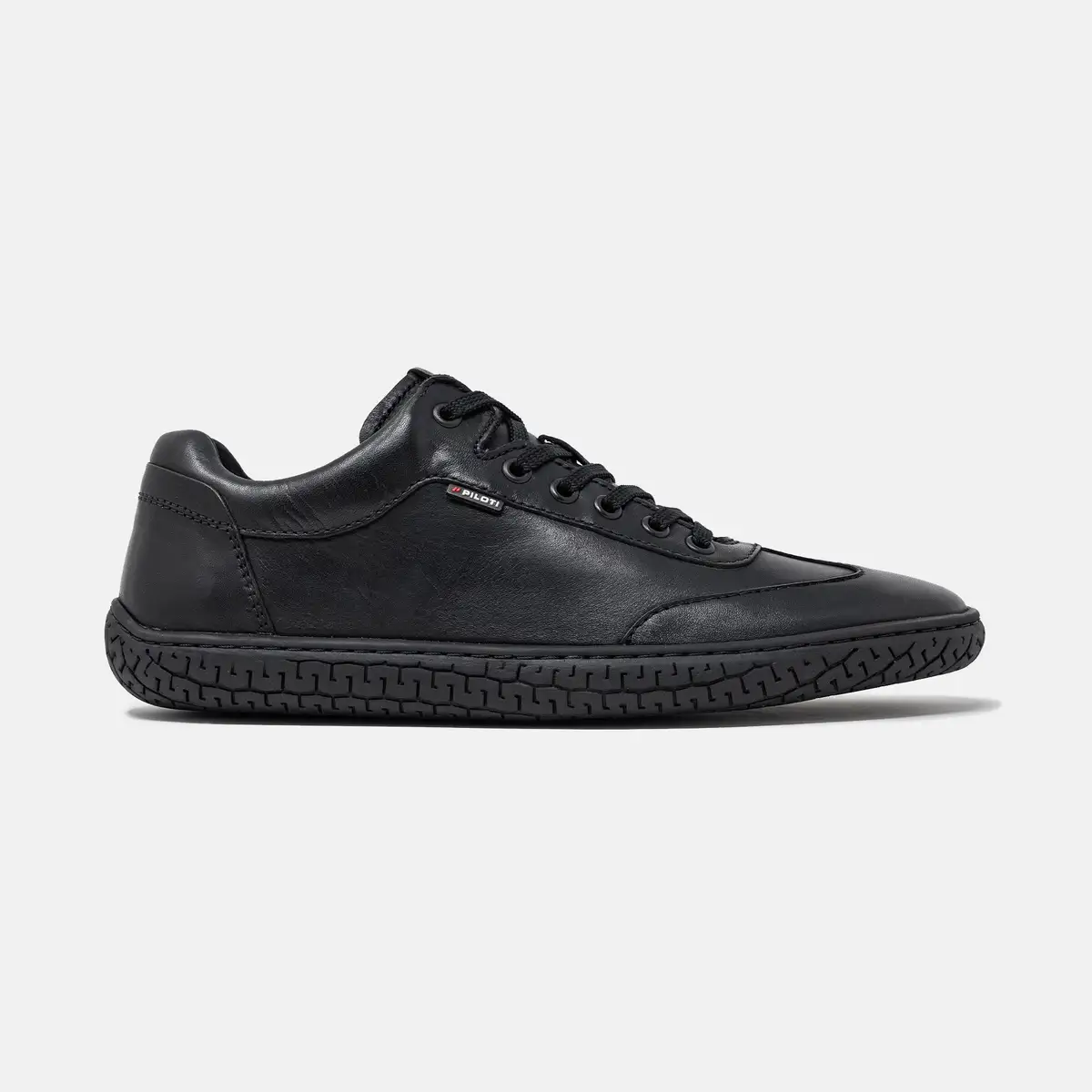
Shoes change sim racing more than most upgrades: a thin, rounded-heel sole turns the brake pedal into something you feel instead of something you estimate. Racing boots are built for exactly this, driving shoes get close with more comfort, and running shoes with thick foam soles are the enemy. Here is what actually works on a load cell.
Quick comparison
| Shoe | Type | Sole | Homologation | Best for |
|---|---|---|---|---|
| Piloti Shift | Driving shoe | Thin rolled heel | No | Best overall |
| Piloti Icona | Driving shoe | Thin rolled heel | No | Everyday style |
| Sparco X-Light | Racing boot | Ultra-thin | FIA | Real-race feel |
| OMP Carrera Low | Racing shoe | Thin | FIA | Classic style |
| OMP ARP Karting | Karting shoe | Thin grippy | No | Budget kart feel |
| Alpinestars Tech-1 K Start | Karting boot | Thin | No | Boot support |
| Puma Speedcat OG | Driving sneaker | Thin low-profile | No | Casual pick |
Best overall: Piloti Shift
Piloti builds shoes for driving, not motorsport homologation, and the Shift is the flagship: a thin sole with a rolled heel edge for smooth pedal transitions, soft leather, and cushioning you can actually walk in. On a load cell brake the feel difference versus sneakers is immediate.
The sole is slightly thicker than a true race boot’s, so ultimate pedal sensitivity goes to Sparco and OMP. As an everyday shoe that doubles as sim footwear, nothing else balances it this well.
Pros: designed for driving, all-day comfort, rolled heel for heel-toe.
Cons: not FIA certified, thicker sole than race boots, premium for a sneaker.
Best everyday style: Piloti Icona
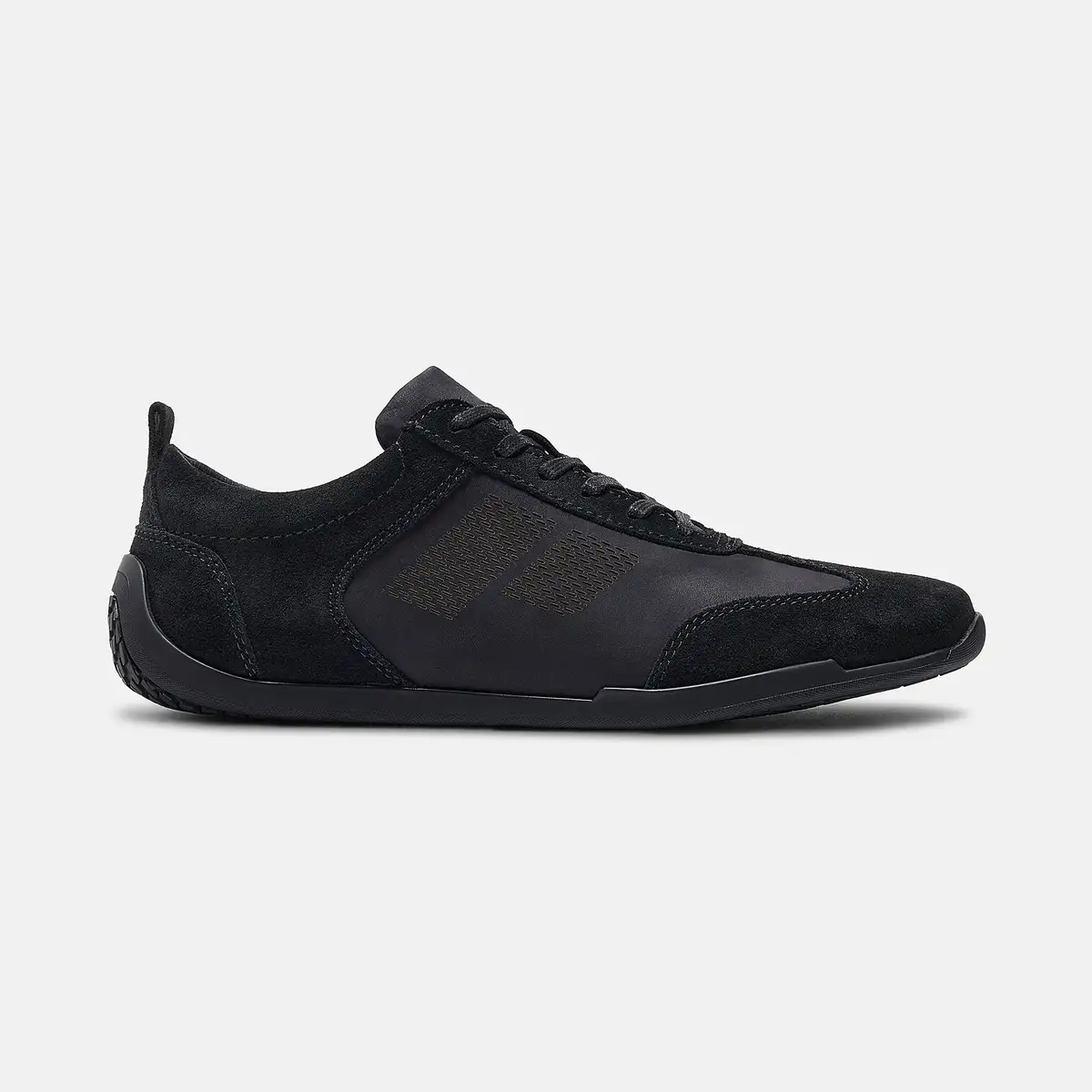
The Icona takes Piloti’s driving sole and wraps it in a cleaner, low-profile silhouette that reads more fashion sneaker than pit lane. Same rolled heel, same thin forefoot for pedal feel, less motorsport styling.
You give up some of the Shift’s padding and support for the slimmer shape. If the rig sits in the living room and shoes stay on after the session, the Icona is the subtler pick.
Pros: understated looks, genuine driving sole, comfortable.
Cons: less support than the Shift, not a race boot, no homologation.
Real-race feel: Sparco X-Light
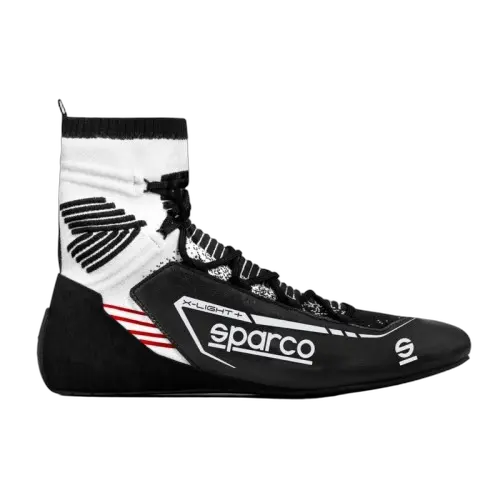
The X-Light is a mid-cut FIA-approved race boot, and it shows: an ultra-thin sole that transmits pedal texture, a narrow profile that avoids snagging between pedals, and fire-retardant construction you will hopefully never need.
Walking in them is deliberately unpleasant, the ankle cut is snug, and they cost real money for something that never leaves the sim rig. For maximum pedal feel, this is the ceiling.
Pros: best-in-class pedal feel, FIA certified, narrow pedal-box fit.
Cons: uncomfortable off the rig, snug sizing, expensive for sim-only use.
Classic style: OMP Carrera Low
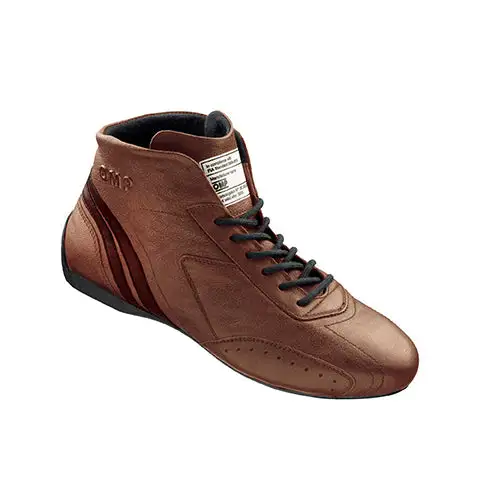
The Carrera Low is OMP’s retro-styled race shoe: suede and leather, a thin motorsport sole, and FIA homologation in a low cut that looks like seventies paddock footwear. Pedal feel is proper race-shoe thin.
The suede shows wear quickly and the narrow European fit runs small. As a race shoe that also looks good in photos of your rig, it has real charm.
Pros: FIA certified, thin sole, classic looks.
Cons: narrow fit, suede durability, snug for wide feet.
Budget kart feel: OMP ARP Karting Shoes
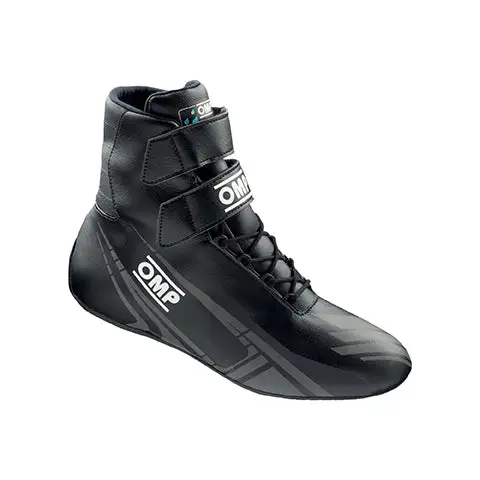
OMP’s karting line trades fireproofing for weatherproofing: a lightweight shoe with a thin, grippy sole built for kart pedal boxes, at a price well below FIA race boots. On sim pedals the feel is 90 percent of the X-Light for noticeably less money.
There is no homologation and the sole tread is grippier than a race boot’s smooth sole, which some drivers dislike for heel-toe. For sim-only use, the savings are real.
Pros: thin sole, kart-specific fit, cheaper than race boots.
Cons: no FIA rating, grippy tread, karting styling.
Boot support pick: Alpinestars Tech-1 K Start
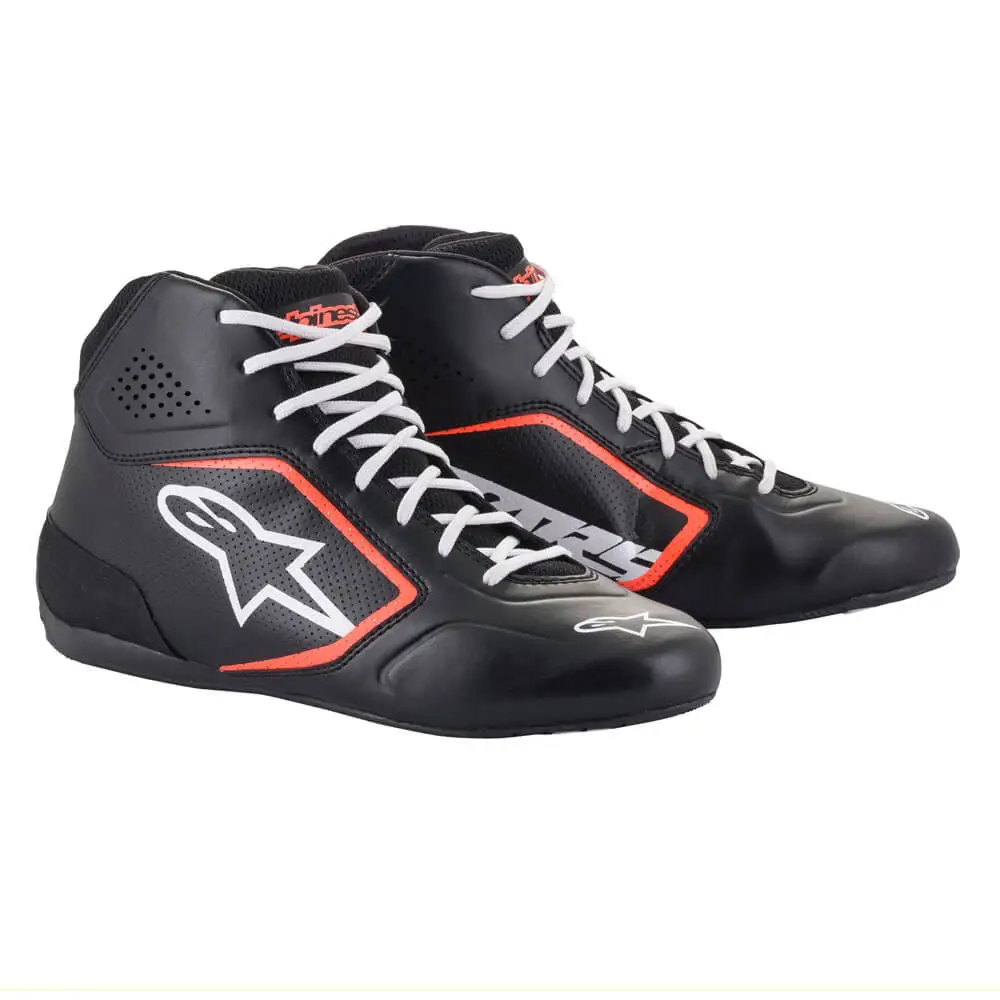
The Tech-1 K Start is Alpinestars’ entry karting boot: a taller ankle with real support, a thin flexible sole, and lacing that cinches the foot down for precise pedal work. If you like the locked-in feel of a boot, this is the affordable way to get it.
The high ankle is more shoe than sim racing strictly needs, and breathability is ordinary on long sessions. Drivers with ankle mobility issues or heavy braking styles will appreciate the structure.
Pros: ankle support, thin sole, kart-proven design.
Cons: taller cut than needed, runs warm, karting looks.
Casual pick: Puma Speedcat OG
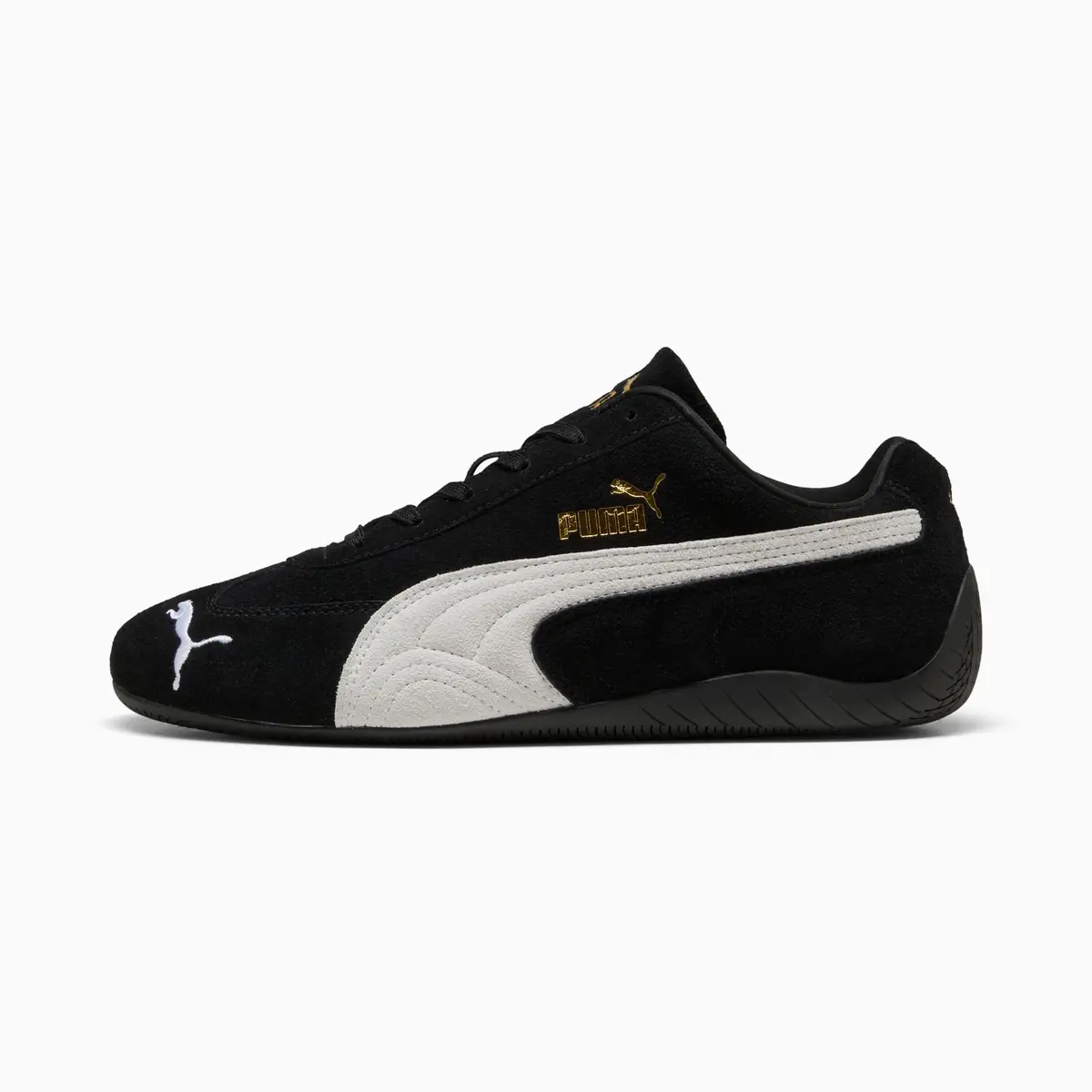
The Speedcat started life as a fireproof race shoe in the early 2000s and survives as a low-profile lifestyle sneaker with a thin sole and rounded heel. Pedal feel is genuinely good for a shoe you can wear to dinner.
The modern version is a fashion shoe, so there is no homologation and the sole is a touch softer than dedicated driving footwear. For casual sim sessions and normal life, it covers both.
Pros: real driving-shoe heritage, wearable anywhere, affordable.
Cons: no homologation, softer sole than race boots, more style than function.
What to look for in sim racing shoes
Thin sole first. Pedal feel scales directly with how little rubber sits between your foot and the pedal face. Race boots are thinnest, driving shoes close behind, running shoes worst.
Rolled heel edges matter. A rounded heel lets your foot pivot smoothly between throttle and brake for heel-toe downshifts. Squared sneaker heels catch on everything.
FIA certification is optional. Homologated boots bring fireproofing you do not need at home, plus the thinnest soles you can buy. Karting shoes drop the fireproofing and the price.
Fit is personal and critical. Race shoes run narrow. Wide feet should size up or look at the Piloti and Puma options, which fit more like regular shoes.
Frequently asked questions
Do sim racing shoes actually help?
Yes. Thin soles improve brake modulation and the rolled heel smooths pedal transitions. The difference is most obvious on load cell brakes where small pressure changes matter.
Can I just use running shoes?
You can, but thick foam soles deaden pedal feel and the wide toe boxes snag between pedals. Barefoot or socks is honestly better than chunky trainers.
Are FIA race boots worth it for sim-only use?
For feel, they are the best available. For value, karting shoes like the OMP ARP deliver most of the thin-sole benefit without paying for fireproofing you will never use.
Recommendation
Most drivers: Piloti Shift. Maximum pedal feel: Sparco X-Light. Budget race feel: OMP ARP karting shoes. Everyday wear that works on the rig: Puma Speedcat.
Sources
Specifications: Piloti, Sparco, OMP, Alpinestars and Puma. Images via authorised retailers where noted in the image credits. Verify sizing and homologation requirements before buying.
Related guides
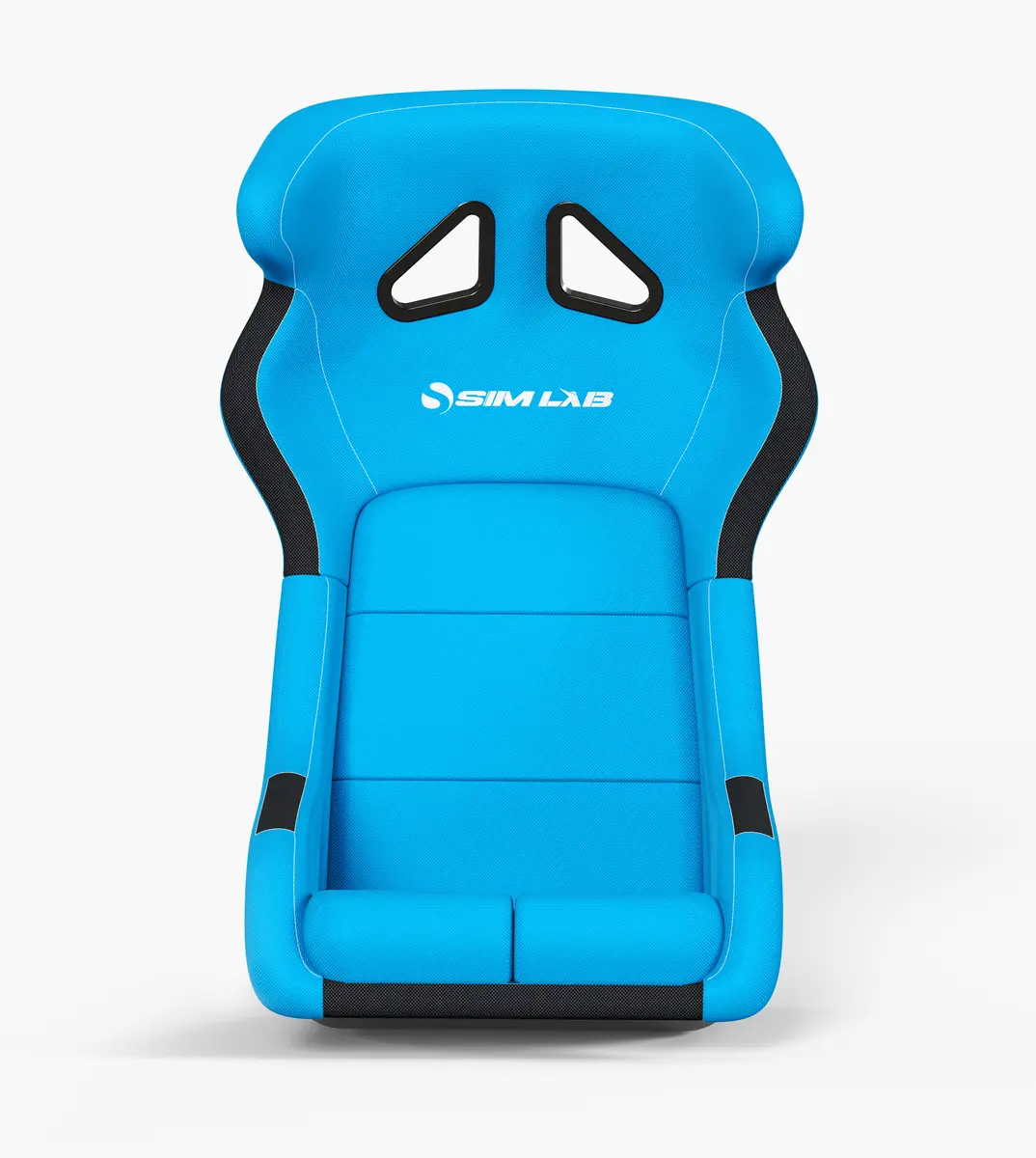
Best Sim Racing Seats in 2026: 7 Seats From Recliners to FIA Buckets
The best sim racing seats compared: Sim-Lab S1 Enduro, NLR ERS3, GT Omega Pro RS, Sparco Grid Q and GP, OMP WRC-R XL and Corbeau FX1 Pro.
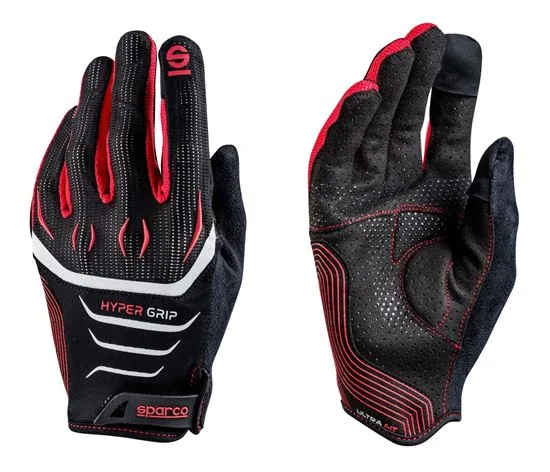
Best Sim Racing Gloves in 2026: 7 Picks for Grip and Wheel Protection
The best sim racing gloves compared: Sparco Hypergrip, F33L, Alpinestars karting gloves, OMP and Mechanix. Grip, breathability, touchscreens and sizing.
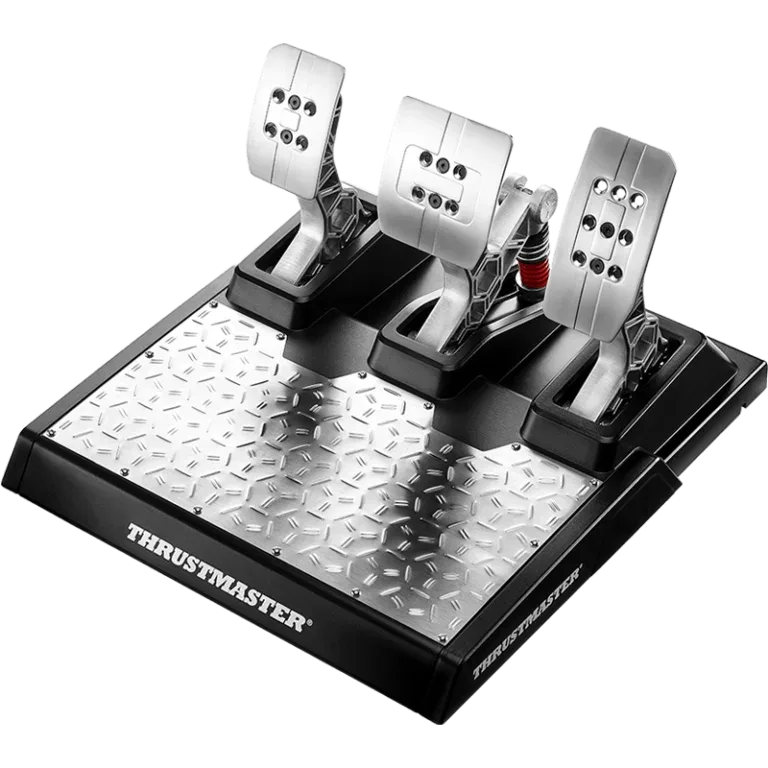
Best Budget Load Cell Pedals in 2026: 7 Affordable Sets Compared
The best budget load cell pedals compared: Thrustmaster T-LCM and Raceline, Fanatec CSL and CSL Elite V2, Moza SR-P and CRP2, Simagic P500.
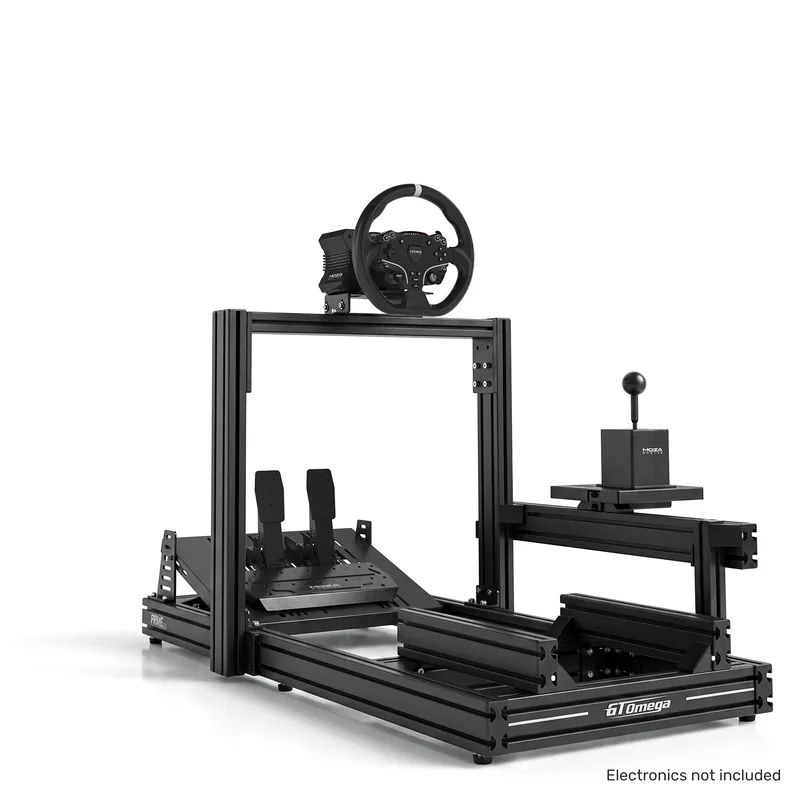
Best Budget Sim Racing Cockpits in 2026: 7 Rigs From $110 to $500
Cheap sim racing cockpits and wheel stands compared: GT Omega Apex and Prime Lite, Playseat Challenge, NLR F-GT Lite, PXN A10 and more.
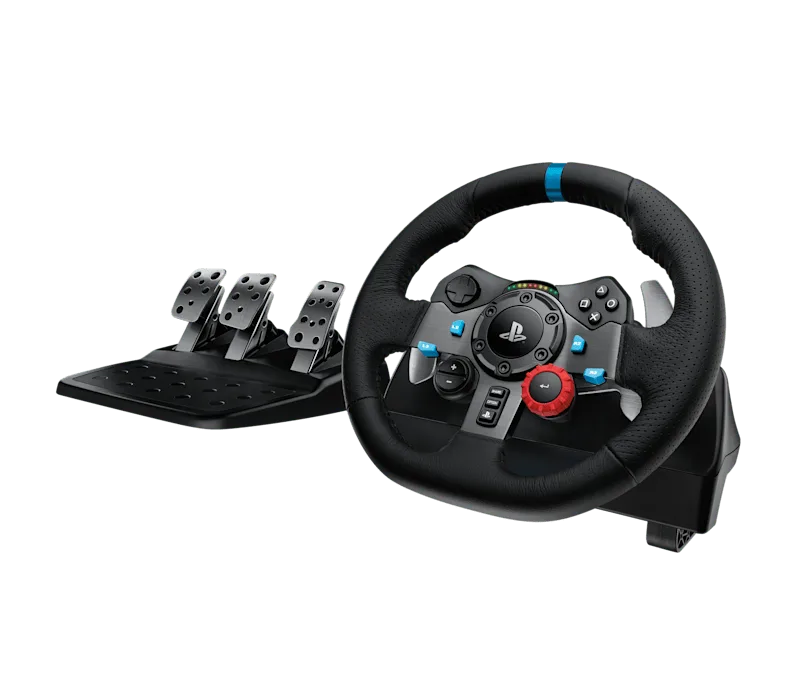
Best Budget Sim Racing Wheels (2026): 7 Cheap Picks From $150
The best cheap sim racing wheels compared: Logitech G29, Thrustmaster T128, T150, PXN and Hori. What you give up at each price and when to spend more.
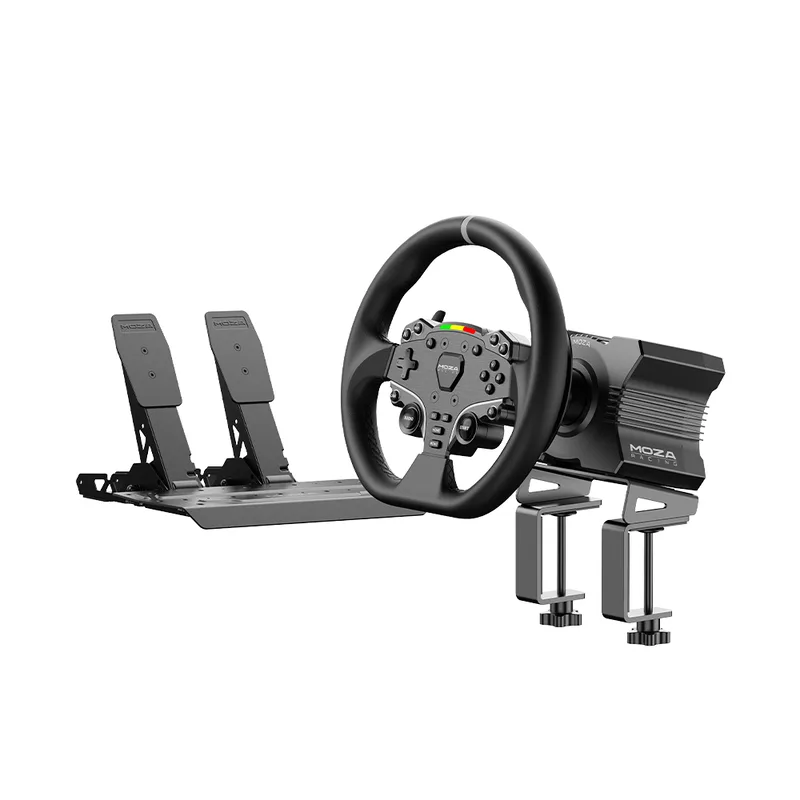
Best Budget Direct Drive Wheels in 2026: 7 Bases and Bundles Compared
Affordable direct drive compared: Moza R3 and R5, Fanatec CSL DD and GT DD Pro, PXN V12 Lite, Simagic Alpha Mini and Thrustmaster T818.