Buying guide
Best Sim Racing Pedals in 2026: 7 Sets From $100 to $600
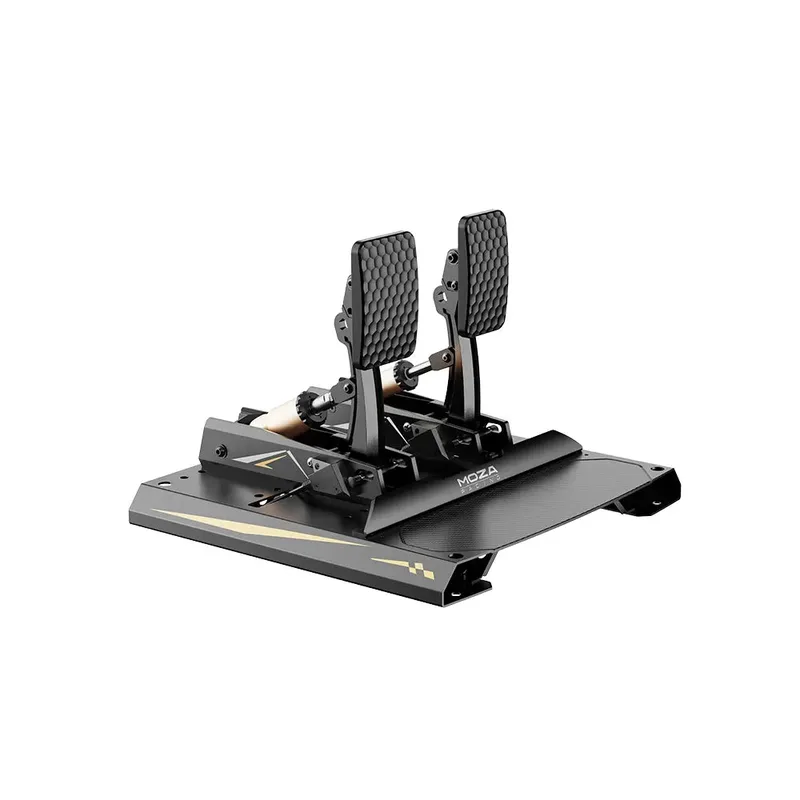
The Moza CRP2 is the best sim racing pedal set for most PC racers because it delivers a proper load cell brake at a mid-range price. On console the Thrustmaster T-LCM is the affordable standard; the Fanatec CSL Pedals are the budget load cell entry.
Pedals are where lap times actually come from. A consistent brake you can repeat a hundred times matters more than torque numbers on the wheelbase, and the jump from a potentiometer pedal to a load cell is the single biggest braking upgrade available. For a narrower look at that technology specifically, see our best load cell pedals guide.
Quick comparison
| Pedal set | Brake type | Pedals | Platform | Best for |
|---|---|---|---|---|
| Moza CRP2 | Load cell 200 kg | 2-3 | PC (USB) | Best overall |
| Fanatec CSL Pedals | Load cell w/ kit | 2 (3 w/ kit) | Fanatec bases, PC | Budget load cell |
| Thrustmaster T-LCM | Load cell 100 kg | 3 | Console + PC | Console standard |
| Fanatec ClubSport V3 | Load cell 90 kg | 3 | Fanatec bases, PC | Feature-packed |
| Heusinkveld Sprint | Load cell 120 kg | 2-3 | PC (USB) | Enthusiast pick |
| Simagic P1000 | Load cell 100 kg | 2-3 | PC (USB) | Adjustable feel |
| Logitech Pro Pedals | Load cell 100 kg | 3 | Logitech bases, PC | G Pro pairing |
Best overall: Moza CRP2
The CRP2 took the mid-range crown by doing the obvious thing well: a 200 kg load cell brake, a smooth throttle, an optional clutch, USB straight to PC, and tool-free angle adjustment. The brake feels firm and repeatable out of the box, and the included spring and elastomer kits let you tune it without ordering parts.
They mount to a rig, not a desk, and USB only means console racers are out unless the wheelbase translates the signal. For PC drivers, though, the price-to-feel ratio is the best in the category.
Pros: 200 kg brake, highly adjustable, clean build, fair price.
Cons: PC only via USB, needs rigid mounting, clutch optional.
Budget load cell: Fanatec CSL Pedals
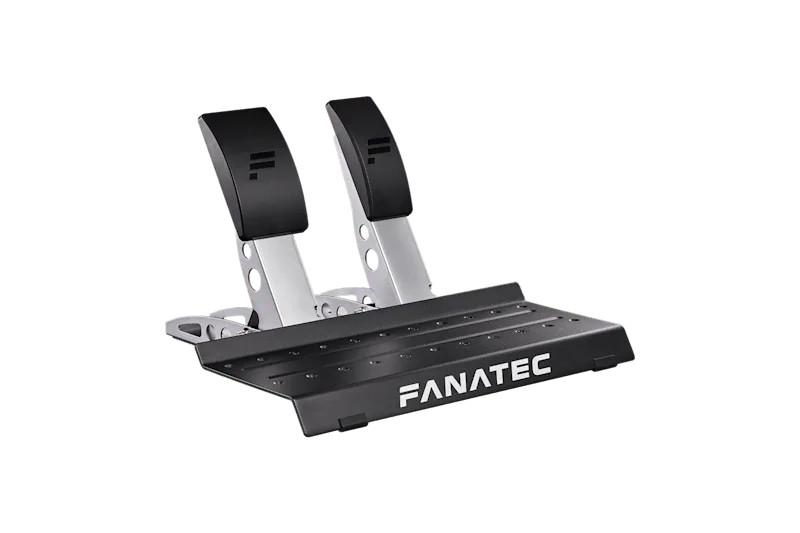
The cheapest way into a real load cell brake. The base CSL Pedals are a two-pedal set; add the Load Cell Kit and you get a proper pressure-measuring brake plus a clutch position. They plug straight into Fanatec bases on console or run over USB on PC.
Without the kit’s elastomers the brake is stiff in a wooden sort of way, and the whole set feels lighter than the pricier options here. Still, nothing else gets you load cell braking for less money.
Pros: cheapest load cell path, console compatible via Fanatec base, upgradeable.
Cons: load cell is an add-on, lightweight frame, basic throttle feel.
Console standard: Thrustmaster T-LCM
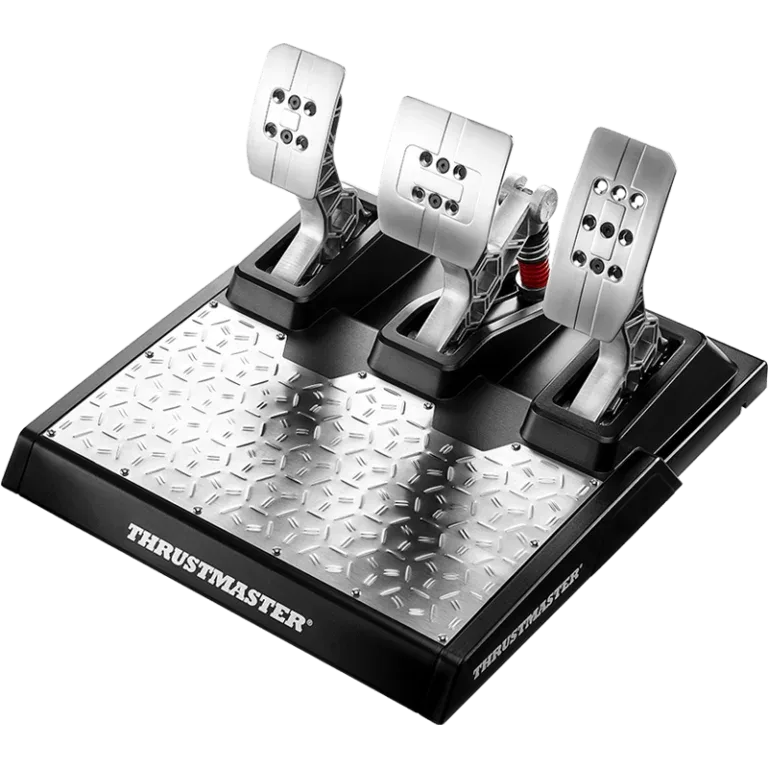
The T-LCM has been the default console load cell set for years: three pedals, a 100 kg brake, six included springs for tuning, and support on Thrustmaster bases for PS and Xbox plus USB on PC. Coming from the stock T248 or T300 pedals, the brake alone changes how consistent your laps get.
The throttle is stiffer than it needs to be and the faceplates look dated next to newer sets. At street price, neither matters much.
Pros: load cell at a console-friendly price, three pedals, works on PS/Xbox via base.
Cons: stiff throttle, older design, plastic frame flex under heavy braking.
Feature-packed: Fanatec ClubSport Pedals V3
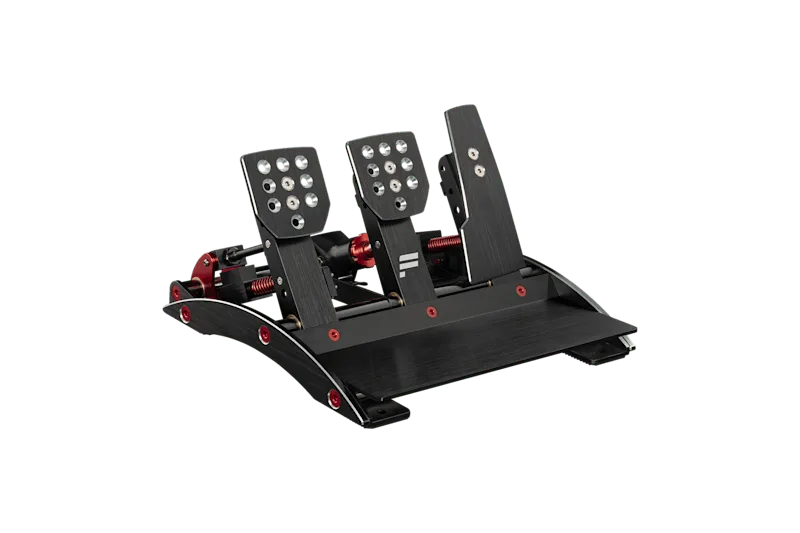
The V3 is the pedal set with everything: load cell brake, hall-effect throttle and clutch, adjustable stiffness, contactless sensors throughout, and vibration motors in the throttle and brake for ABS and traction feedback. Through a Fanatec base it works on console too.
It is showing its age against the CRP2, and the price no longer undercuts the boutique options. The vibration motors are a love-it-or-disable-it feature.
Pros: full feature set, console compatible via Fanatec, contactless sensors.
Cons: aging design, vibration is divisive, mid-price without mid-price freshness.
Enthusiast pick: Heusinkveld Sprint
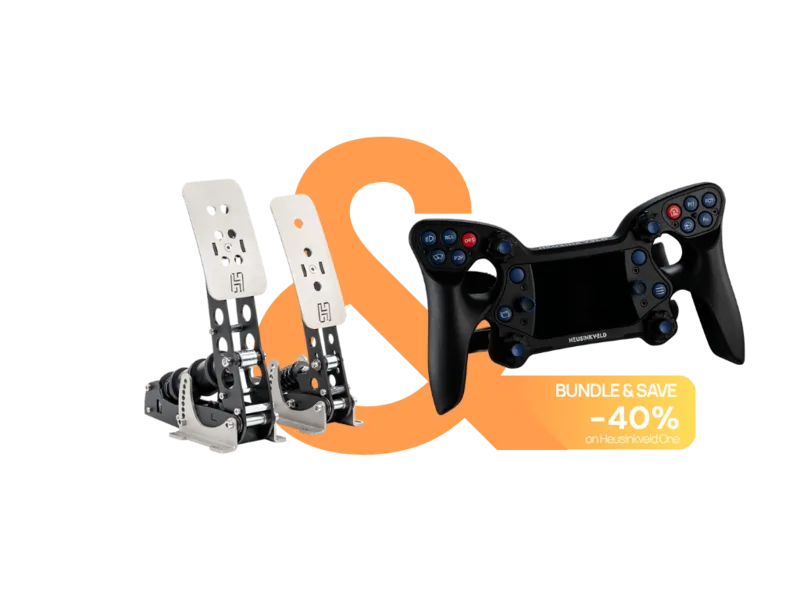
The Sprint is where pedal feel stops being a compromise. A 120 kg load cell brake with elastomer tuning, fully adjustable geometry, SmartControl software for response curves, and build quality that earns the boutique label. The brake progression comes closer to a real car than anything cheaper manages.
PC only, priced like it, and the two-pedal default means the clutch costs extra. For buyers who have already upgraded once, this is usually the last set they buy.
Pros: superb brake feel, deep tuning, durable build.
Cons: PC only, premium price, clutch optional.
Most adjustable: Simagic P1000
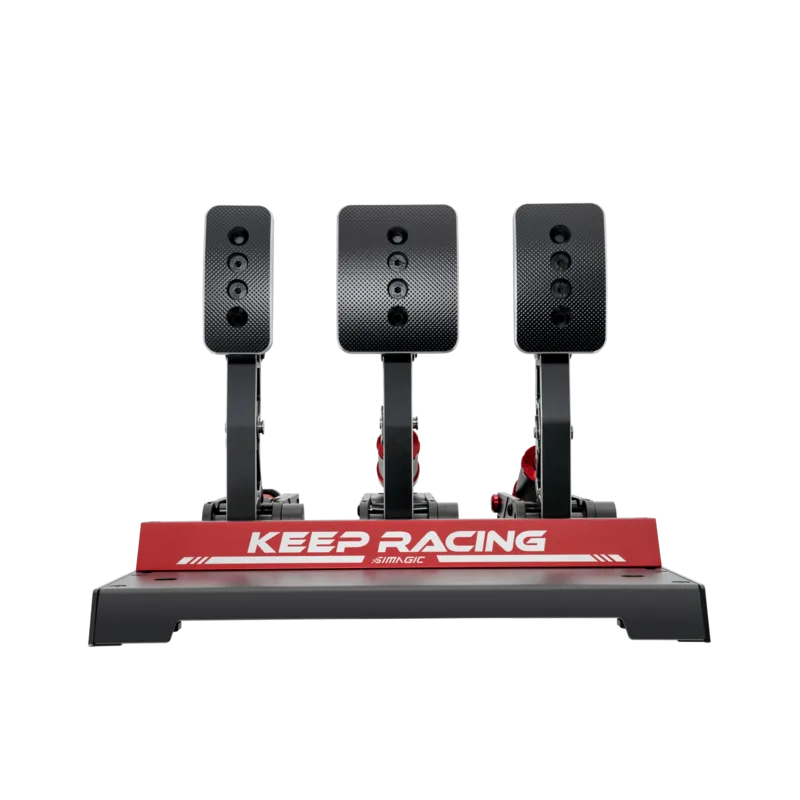
The P1000’s trick is modularity: swap springs and elastomers today, add the hydraulic brake conversion later, and tune it all in Simagic’s software. The 100 kg brake and hall sensors cover the fundamentals well, and aftermarket support is strong.
Pricing lands between the CRP2 and the Sprints, and reseller availability varies by region. The hydraulic upgrade path is the reason to pick it over either of those.
Pros: upgradeable to hydraulic, strong tuning options, solid brake.
Cons: reseller availability, hydraulic kit costs extra, PC only.
Logitech ecosystem pick: Logitech Pro Racing Pedals
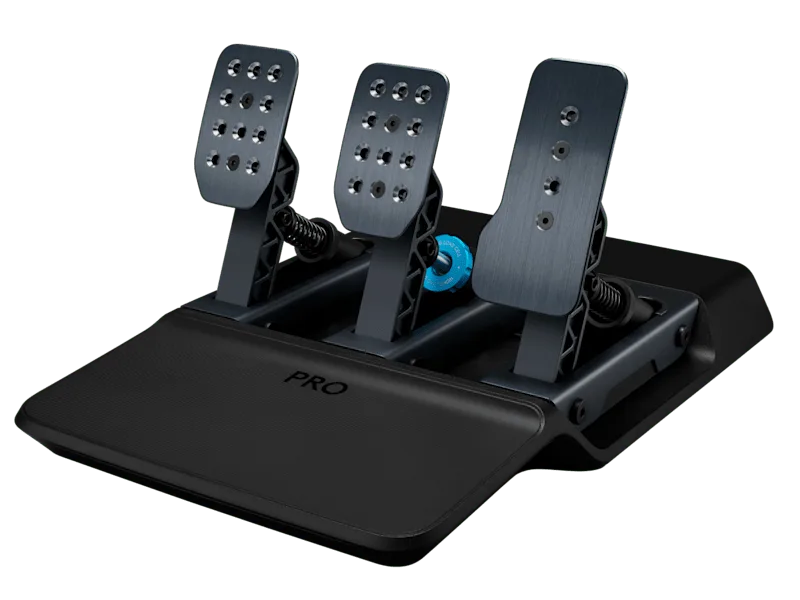
Logitech’s Pro Pedals bring a 100 kg load cell brake to the G Pro ecosystem, and unlike the rest of Logitech’s lineup they also run over USB on PC with other brands’ bases. The brake feels firm and predictable. Console support on PS5 or Xbox through the G Pro base is the real selling point.
Priced against the CRP2 they look sparse on adjustment. Buy them if you are already in the Logitech ecosystem or need console compatibility.
Pros: console compatible via G Pro, USB on PC, clean industrial design.
Cons: limited tuning, premium price, ecosystem-centric.
What to look for in sim racing pedals
The brake sensor decides everything. Potentiometer brakes measure pedal position, so your braking point lives in ankle memory. Load cells measure pressure, which is how real brakes work and how humans actually build consistency. It is the most important spec on this page.
Check the connection method. USB pedals work with any PC setup. On console the pedals must connect through the wheelbase, which locks you to that base’s brand. Fanatec, Thrustmaster and Logitech pedals do not cross over on console.
Three pedals need a plan for the clutch. If you never drive H-pattern cars, a two-pedal set saves money. If you do, buy three pedals now instead of adding one later.
Stiff brakes need a rig. A 100+ kg load cell will tip a pedal plate on carpet. Sort out your mounting before buying the heavy stuff.
Frequently asked questions
Are load cell pedals worth it?
Yes, more than almost any other upgrade. Consistent braking points are where pace comes from, and pressure-based braking is dramatically easier to repeat than position-based.
Do USB pedals work on PS5 or Xbox?
Not directly. On console the pedals must connect to the wheelbase, and the base must be console-licensed. USB pedals are PC only.
Hydraulic or load cell?
Hydraulics feel closer to real brakes at the top end but cost and complexity jump. A good load cell brake covers 95 percent of drivers. Start there.
Recommendation
PC racers should buy the Moza CRP2. Console players get the Thrustmaster T-LCM or the Fanatec CSL Pedals with the load cell kit. Anyone already at mid-range should skip to the Heusinkveld Sprint and stop upgrading.
Sources
Specifications: Moza Racing, Fanatec, Thrustmaster, Heusinkveld, Simagic and Logitech G. Verify compatibility and pricing before buying.
Related guides
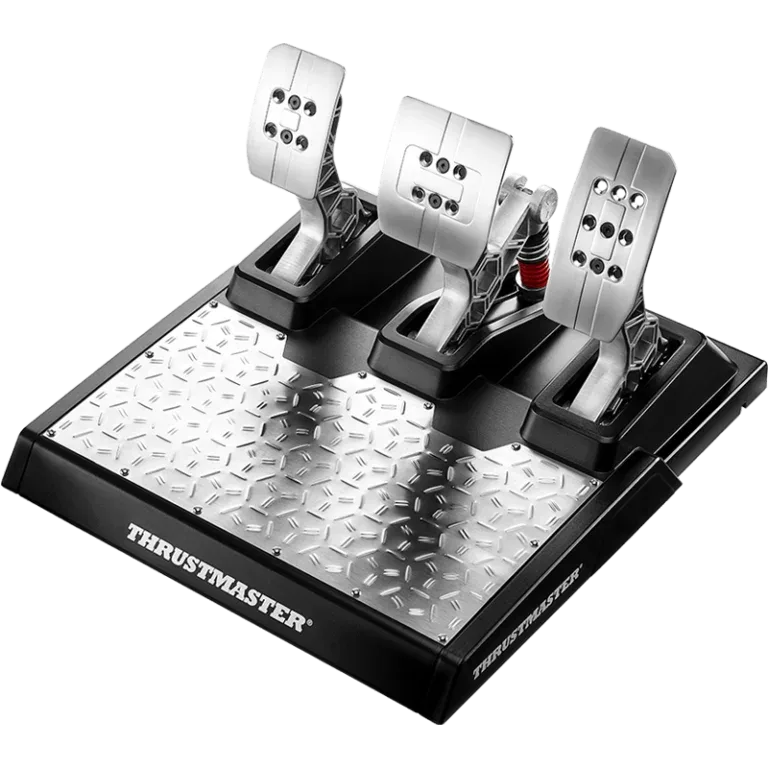
Best Load Cell Pedals for Sim Racing in 2026: 7 Sets Ranked
The best load cell pedals compared: Thrustmaster T-LCM, Fanatec CSL and ClubSport, Moza CRP2, Heusinkveld Sprint, Simagic P1000 and Logitech Pro.
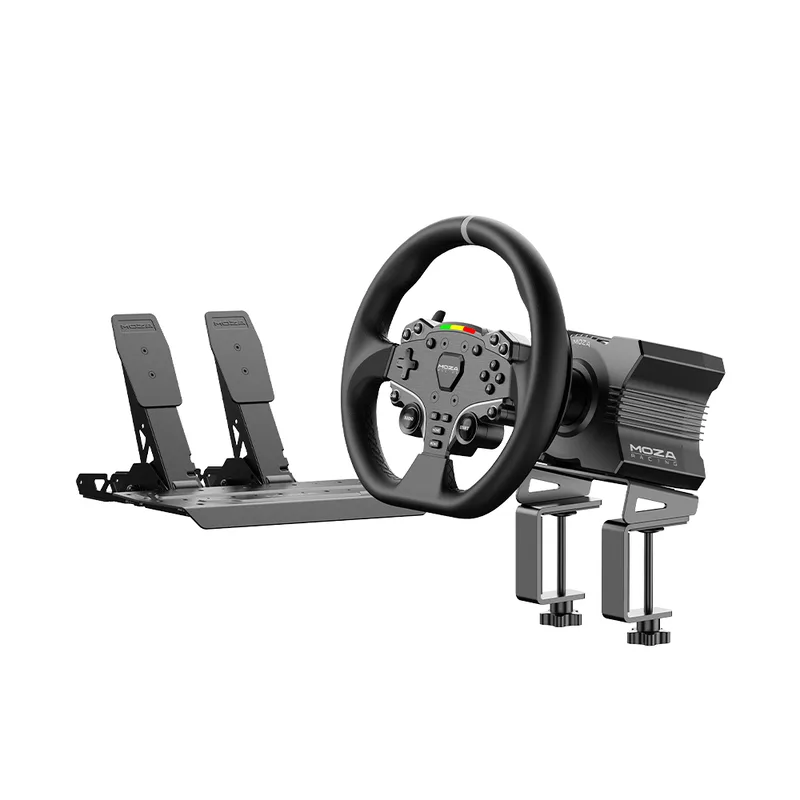
Best Budget Direct Drive Wheels in 2026: 7 Bases and Bundles Compared
Affordable direct drive compared: Moza R3 and R5, Fanatec CSL DD and GT DD Pro, PXN V12 Lite, Simagic Alpha Mini and Thrustmaster T818.
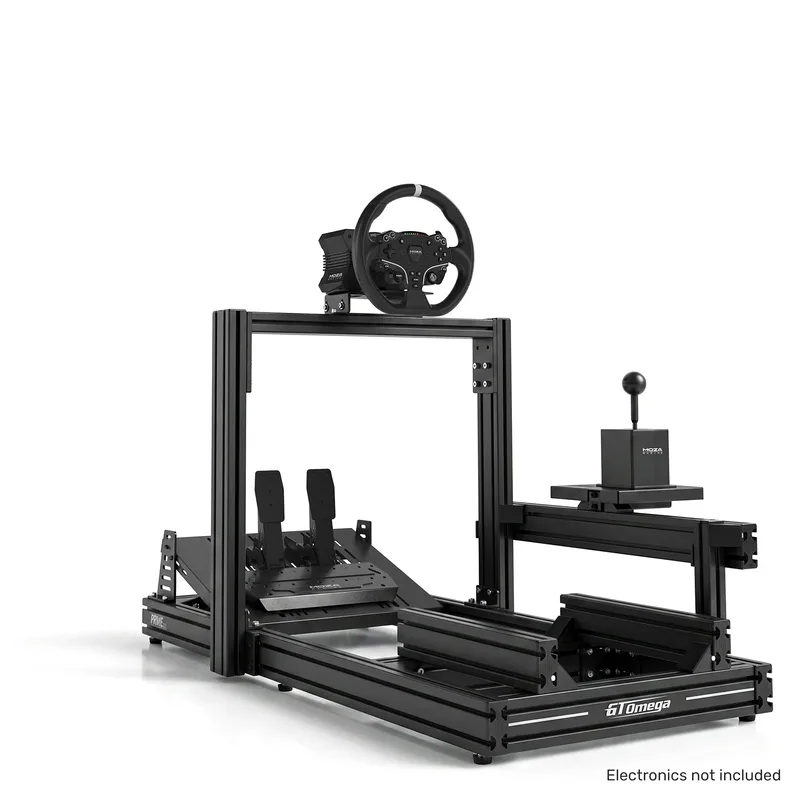
Best Budget Sim Racing Cockpits in 2026: 7 Rigs From $110 to $500
Cheap sim racing cockpits and wheel stands compared: GT Omega Apex and Prime Lite, Playseat Challenge, NLR F-GT Lite, PXN A10 and more.