Review
Simjack UT Pedals Review: A 200 kg Load Cell Brake for Around $150
The Simjack UT pedals put a 200 kg load cell brake and all-metal construction at a price where the Thrustmaster T-LCM used to win by default. They need some setup patience, but the hardware underneath is serious.
Verdict
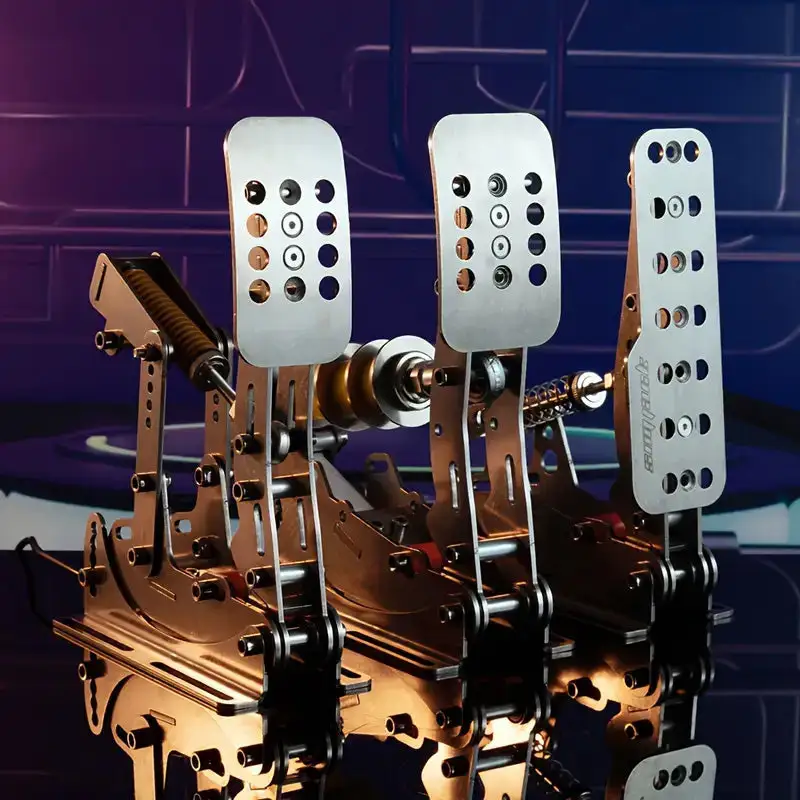
The Simjack UT is the budget pedal set that makes the mid-range uncomfortable. For roughly $140 to $250 depending on configuration, you get laser-cut stainless steel construction, a 200 kg load cell brake, adjustable elastomers in the box and a 16-bit control box. Two and three-pedal versions exist, and hydraulic damper options push it further into enthusiast territory.
The honest catch: they arrive needing work. Reviewers consistently find loose hardware, noisy pivots and dampers set too tight from the factory. An evening with the included adjustments turns them into something that embarrasses pedals costing twice as much. If you want plug-and-play, buy the T-LCM instead.
What you get
- Two-pedal (UT-P2) or three-pedal (UT-P3) sets; optional hydraulic dampers on each pedal.
- 200 kg load cell brake with swappable elastomers for tuning.
- 3 mm laser-cut stainless steel plates, adjustable pedal angle and travel.
- STM32 control box with 16-bit output per pedal, USB direct to PC, no drivers needed.
- Software for non-linear output curves, deadzones and brake force mapping.
- PC only. No console support, no wheelbase passthrough.
How they drive
The brake is the headline and it holds up. A genuine 200 kg load cell with elastomer tuning means you can set it anywhere from street-car soft to formula-car stiff, and pressure-based braking works the way it should. Heel and toe space on the widened brake plate is a nice touch at this price.
The throttle is well weighted with decent travel, though the mechanism is not as smooth as premium sets out of the box. Owners fix most of it with pivot adjustment and lubricant. The clutch, on three-pedal sets, uses a lever design that mimics the two-stage feel of a real clutch.
Budget for setup time. Screws need checking, dampers may need backing off, and the brake benefits from experimenting with the elastomer stack. None of this is hard, but it is not a ten-minute unboxing either.
Who it is for
Buy the UT if you are on PC, handy with an Allen key, and want load cell braking for the least money that is still honest hardware. It is the enthusiast’s budget pick.
Skip it if you want something that works perfectly out of the box, if you race on console, or if customer support networks matter to you. Simjack sells direct and through a handful of resellers; the experience is closer to buying from a small workshop than from Fanatec.
Alternatives
- Thrustmaster T-LCM: the default at this price. Less adjustability and a 100 kg brake, but plug-and-play, console support and a real warranty network.
- Fanatec CSL Pedals: the other budget load cell path via the load cell kit. Console-friendly through Fanatec bases, lighter build than the Simjack.
- Moza CRP2: costs more, gives you the same 200 kg class brake with polish, software and support the Simjack cannot match.
- Heusinkveld Sprint: what the UT is clearly modeled on. Four times the price, meaningfully smoother, zero setup grief.
Frequently asked questions
Do Simjack UT pedals work on PS5 or Xbox?
No. They are USB direct to PC only and do not connect to any wheelbase.
Are the hydraulic dampers worth it?
They smooth the brake’s release and the throttle’s return. Nice to have rather than essential; the load cell and elastomers do the real work on consistency.
Where do you actually buy them?
Direct from Simjack’s own store and a small number of regional resellers, plus marketplace listings. Stock and shipping times vary more than with big brands.
Recommendation
PC racers on a tight budget who enjoy tinkering: the Simjack UT is the most brake you can buy for the money. Want plug-and-play or console support: the Thrustmaster T-LCM. Have a bit more budget: the Moza CRP2 is the refined version of the same idea.
Sources
Specifications: Simjack, Thrustmaster, Fanatec, Moza Racing and Heusinkveld. Verify current pricing and reseller availability before buying.
Related guides
VRS DirectForce Pro Pedals Review: Built for People Who Measure Brake Pressure
VRS DirectForce Pro Pedals review: 140 kg load cell brake, stainless steel construction, $649 for the two-pedal set. Who they suit and what to buy instead.
Moza R5 vs R3: Which Budget Direct Drive Bundle Should You Buy?
Moza R5 vs R3 compared: torque, platform support, pedals, price and upgrade paths. The R5 wins on strength for PC; the R3 is the only one that works on Xbox.
GT Omega Prime Lite Review: The Cheapest Fixed Rig Worth Buying
GT Omega Prime Lite review: what the budget cockpit gets right, where it flexes, which wheelbases it can handle, and the alternatives worth considering.
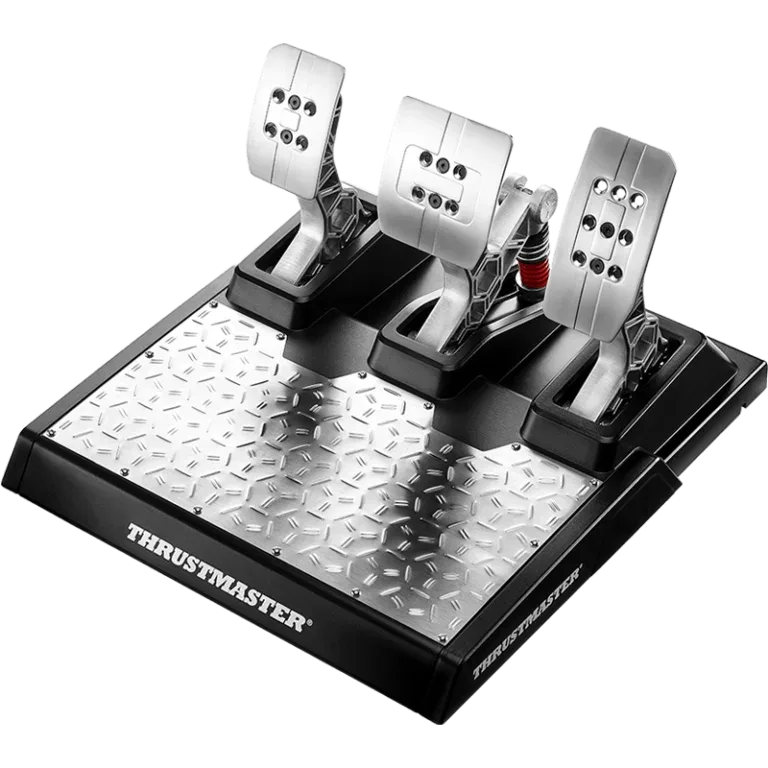
Best Budget Load Cell Pedals in 2026: 7 Affordable Sets Compared
The best budget load cell pedals compared: Thrustmaster T-LCM and Raceline, Fanatec CSL and CSL Elite V2, Moza SR-P and CRP2, Simagic P500.
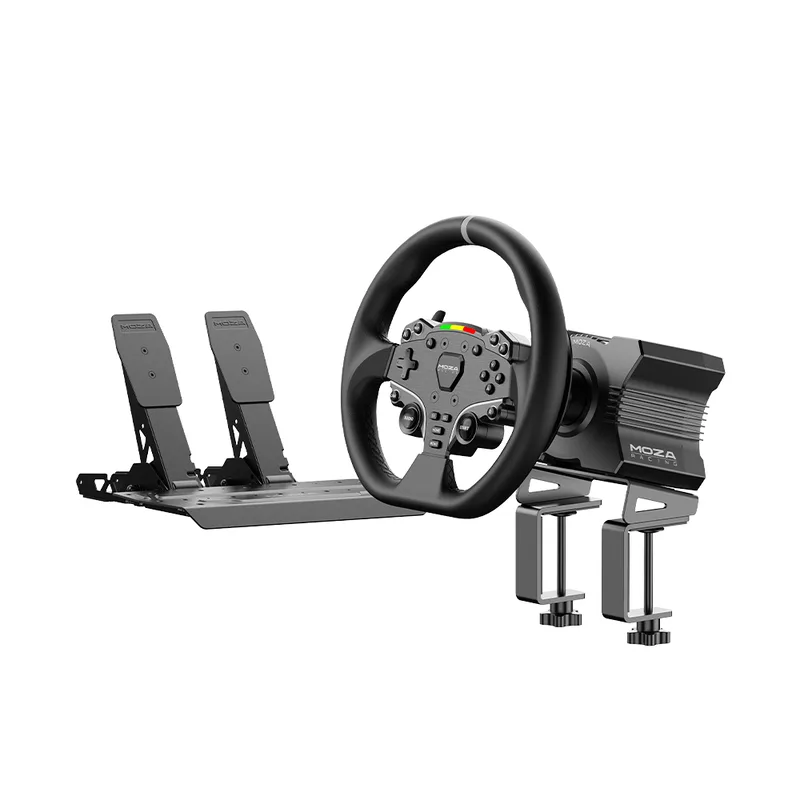
Moza R5 Racing Wheel Review: The Easiest Way Into Direct Drive in 2026
Moza R5 bundle review: 5.5 Nm direct drive base, ES wheel and SR-P Lite pedals for about $500. Who should buy it and what to buy instead.
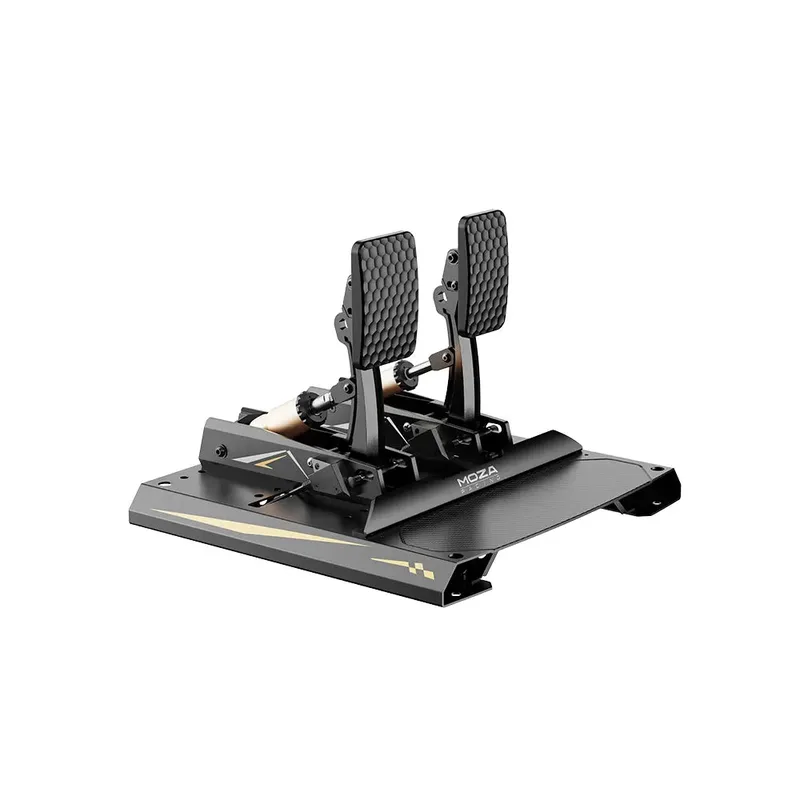
Best Sim Racing Pedals in 2026: 7 Sets From $100 to $600
The best sim racing pedal sets compared: Thrustmaster T-LCM, Fanatec CSL and ClubSport, Moza CRP2, Heusinkveld Sprint and more. Load cells explained.