Review
VRS DirectForce Pro Pedals Review: Built for People Who Measure Brake Pressure
The VRS DirectForce Pro Pedals are the no-decoration choice: a 140 kg load cell brake, a frictionless throttle and stainless steel everything for $649. Competitive drivers love them. Casual buyers should spend less.
Verdict
The VRS DirectForce Pro Pedals are what you buy after you have already been through a mid-range set and know exactly what annoyed you about it. Virtual Racing School, the American coaching company, built them around one idea: braking consistency. The load cell brake adjusts up to 140 kg at the pedal face with real steel springs, the throttle is deliberately frictionless, and the stainless construction is meant to be the last pedal set you buy.
They are also the least glamorous premium pedals on the market. Plain box, no mounting bolts included, a control module that ships unlabeled. At $649 for two pedals they are priced against Heusinkveld and Asetek, and they earn it on feel and durability rather than presentation. PC only, always.
What you get
- Two-pedal set (throttle and brake) for $649; clutch and three-pedal sets available at $848.
- Load cell brake adjustable from soft to a 140 kg pedal-face maximum, with adjustable linearity, deadzones and travel.
- Frictionless throttle designed for fine modulation, max configurable force around 8.4 kg.
- Laser-cut 304 stainless steel and 6061 aluminum bodies, bead-blasted finish.
- DirectForce controller box with 16-bit resolution, USB to PC, VRS Config Tool software.
- Full set weight around 4.8 kg. PC only; no console support.
How they drive
The brake is the reason these exist. A heavy, progressive load cell brake you tune with spring rates and travel rather than stacking elastomers, and it stays consistent session after session because steel springs do not degrade like rubber. Trail braking precision is the whole pitch and it lands.
The throttle takes a session to recalibrate your right foot. It is intentionally light and smooth, which is exactly what fast drivers want for throttle modulation and exactly wrong if you like a weighted pedal. You can firm it up in the software and with spring adjustment, but the character stays on the light side.
What reviews consistently flag is the out-of-box experience. No mounting hardware, a controller you have to identify by trial and error, and documentation aimed at people who already know pedal geometry. It is engineering-first, packaging-second.
Who it is for
Buy them if you race competitively, care about brake pressure repeatability above all else, already own a rigid cockpit, and want a set that will not need replacing. VRS buyers tend to be the people comparing telemetry traces.
Skip them if this is your first load cell set (the Moza CRP2 delivers most of the benefit for far less), if you race on console, or if premium unboxing matters to you.
Alternatives
- Heusinkveld Sprint: the other boutique benchmark. Smoother out of the box, friendlier setup, similar money. The Sprints feel more polished; the VRS feel more industrial.
- Moza CRP2: 200 kg load cell, deep tuning, roughly half the price. The smart buy for everyone except top-split competitors.
- Simagic P1000: modular mid-range set with a hydraulic upgrade path. Less extreme brake, more ways to change it later.
- Fanatec ClubSport V3: aging but console-compatible through Fanatec bases. The pick if you are not on PC.
Frequently asked questions
Do VRS Pro Pedals work on PS5 or Xbox?
No. They connect over USB through the DirectForce controller and are PC only. On console you need pedals that plug into a licensed wheelbase.
Are they better than Heusinkveld Sprints?
Different rather than better. VRS offers a heavier maximum brake force and more industrial construction; the Sprints are smoother and easier to set up. Competitive drivers split almost evenly between the two.
Can I add a clutch later?
Yes. VRS sells the clutch pedal separately, so a two-pedal set can grow into three.
Recommendation
Top-level competitors on PC: the VRS Pro Pedals are worth their price. Everyone else should start with the Moza CRP2 and only upgrade when the brake is provably the thing holding back lap times.
Sources
Specifications and pricing: VRS, Heusinkveld, Moza Racing, Simagic and Fanatec. Verify current pricing before buying.
Related guides
Simjack UT Pedals Review: A 200 kg Load Cell Brake for Around $150
Simjack UT pedals review: stainless steel, 200 kg load cell brake, optional hydraulic dampers, from about $140. Real budget competition for the T-LCM.
Best Load Cell Pedals for Sim Racing in 2026: 7 Sets Ranked
The best load cell pedals compared: Thrustmaster T-LCM, Fanatec CSL and ClubSport, Moza CRP2, Heusinkveld Sprint, Simagic P1000 and Logitech Pro.
PS5 Steering Wheel and Pedals Under $100 (2026): 7 Cheap Sets Compared
PS5 steering wheel and pedal sets around $100 compared: Hori Racing Wheel Apex, PXN V9, PXN V3 Pro, PXN V900, Nitho Drive Pro and the cheapest force feedback options.
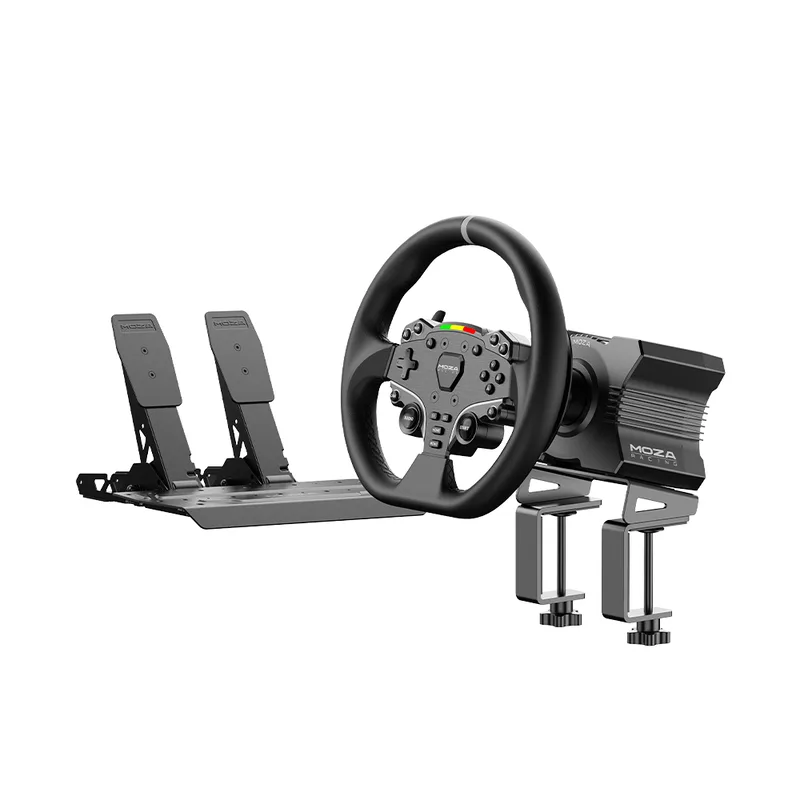
Best Racing Wheel and Pedal Bundles for PC in 2026
The best PC racing wheel and pedal bundles compared: Moza R5 and R3, Logitech G923, Thrustmaster T300 RS GT, T248, T128 and Fanatec CSL DD.
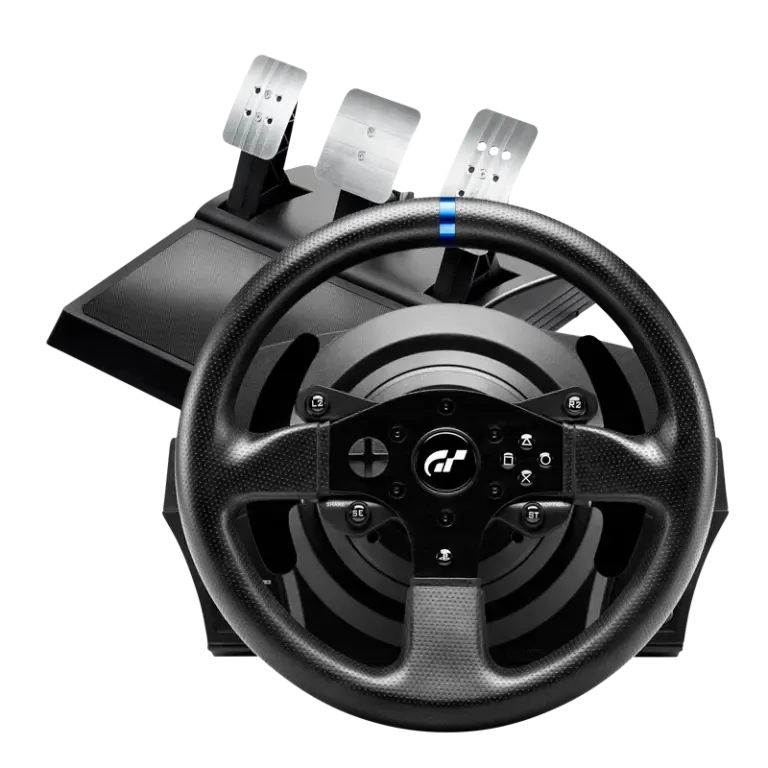
Best Sim Racing Wheel and Pedal Sets in 2026: 7 Combos Compared
The best sim racing wheel and pedal combos compared: Logitech G923, Thrustmaster T300 RS GT, T248, T128, Moza R3, Hori Apex and PXN V9.
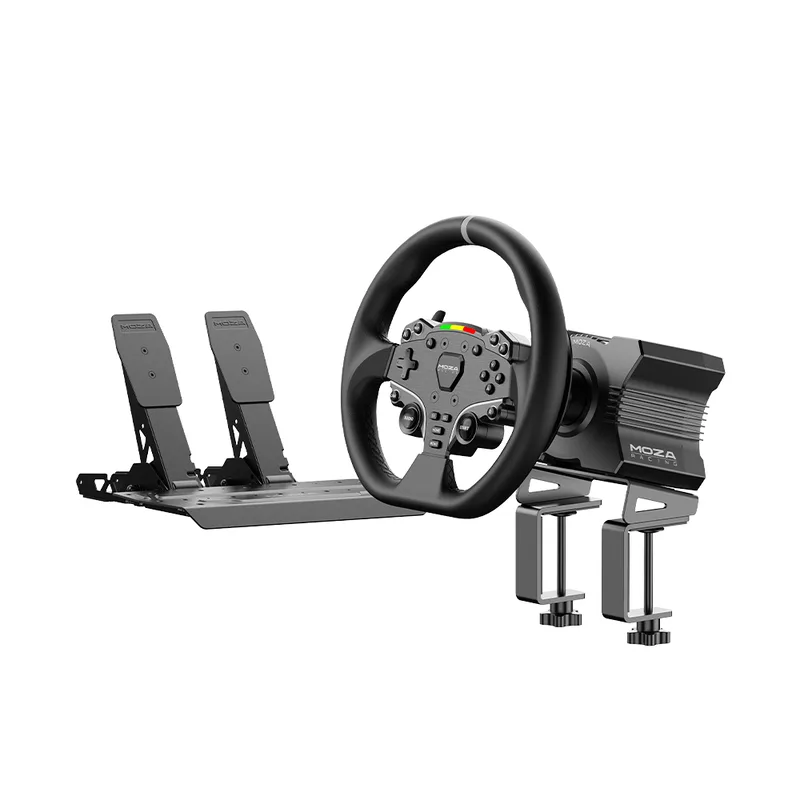
Moza R5 Racing Wheel Review: The Easiest Way Into Direct Drive in 2026
Moza R5 bundle review: 5.5 Nm direct drive base, ES wheel and SR-P Lite pedals for about $500. Who should buy it and what to buy instead.